
Build your product.
We’ll build the integrations.
Turn customer requests into working integrations, with custom logic, backend changes, and ongoing maintenance included.
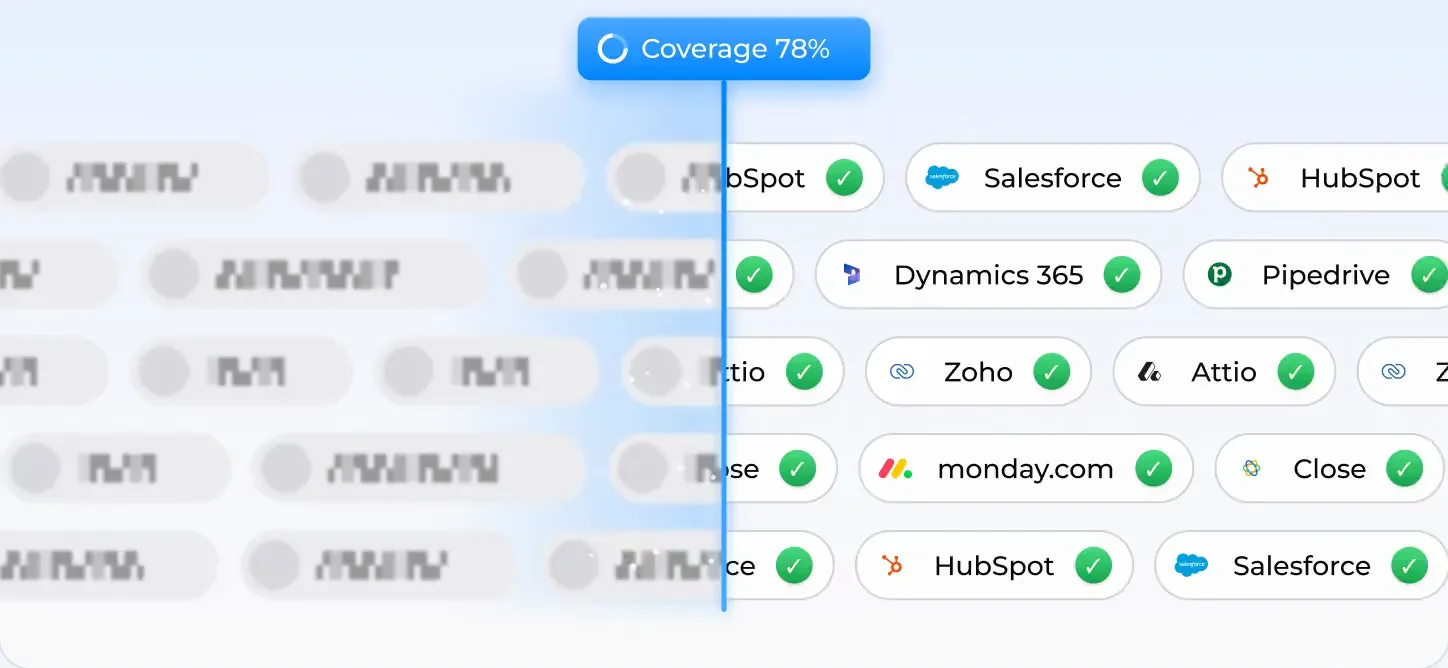
Different customers. Different requirements.
- Their systems.One customer uses Salesforce. Another needs HubSpot or a custom API.
- Their data.Standard objects for one account. Custom objects and field mappings for another.
- Their workflows.A simple sync for one team. A multi-step process for the next.
Built for launch. Maintained after it.
Get implementation, backend changes, testing, and ongoing maintenance from a named integration engineer.
Book a demo →Platform development
Connect to your customer’s system with the right APIs, authentication, and platform-specific code.
Customer-specific logic
Support each customer’s objects, field mappings, and workflows.
Backend changes and testing
Get the required changes in your codebase, with testing across the full data flow.
Ongoing maintenance
Keep integrations working as APIs and requirements change. With code access, fixes arrive as pull requests for your review.
From request to release.
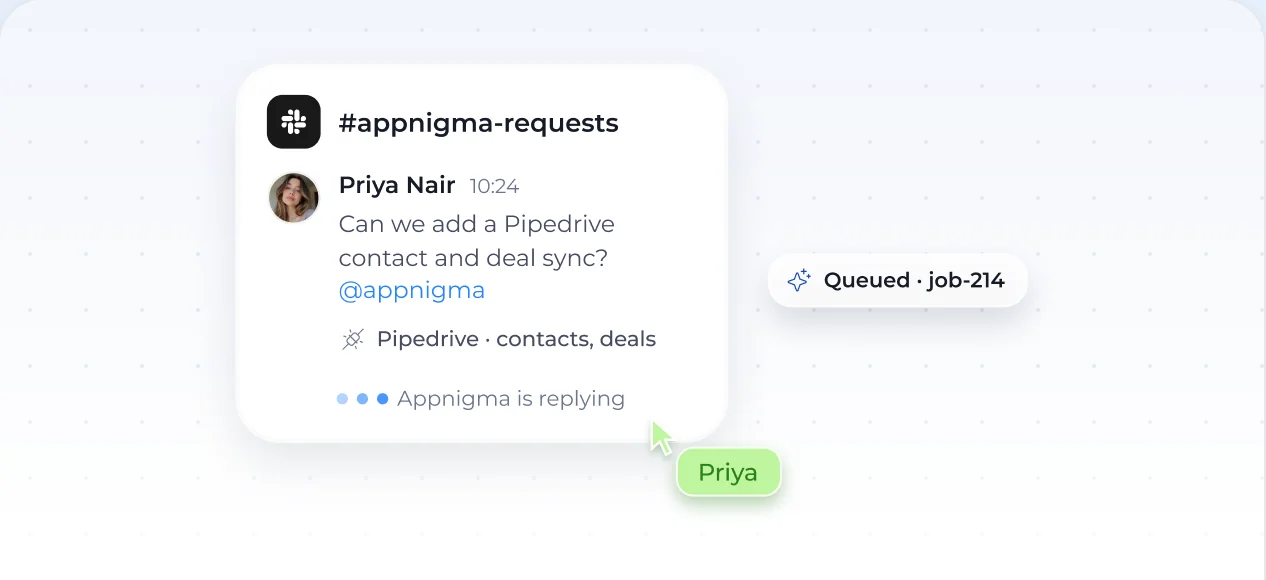
Send the request.
Send a ticket or Slack request with the systems, data, and customer use case.
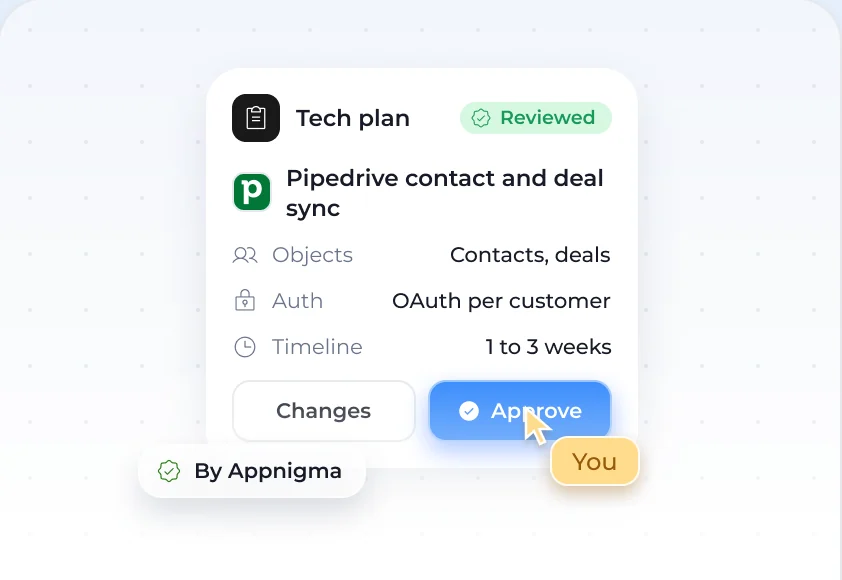
Approve the plan.
Agree on requirements, timing, backend changes, and where the integration runs before development starts.
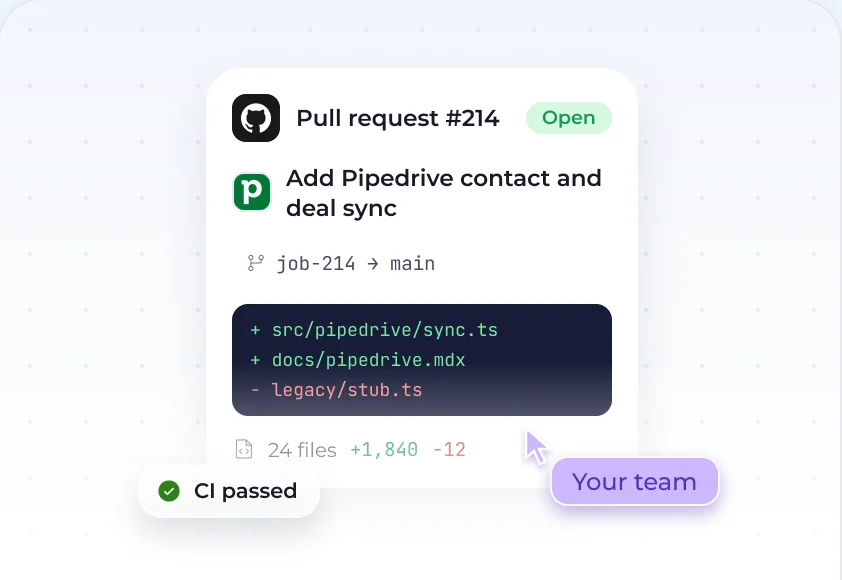
Get a tested integration.
Implementation and backend changes arrive with full-flow testing and a pull request for review.
Review and release.
Test the result and approve the pull request. Release and handoff documentation are included.
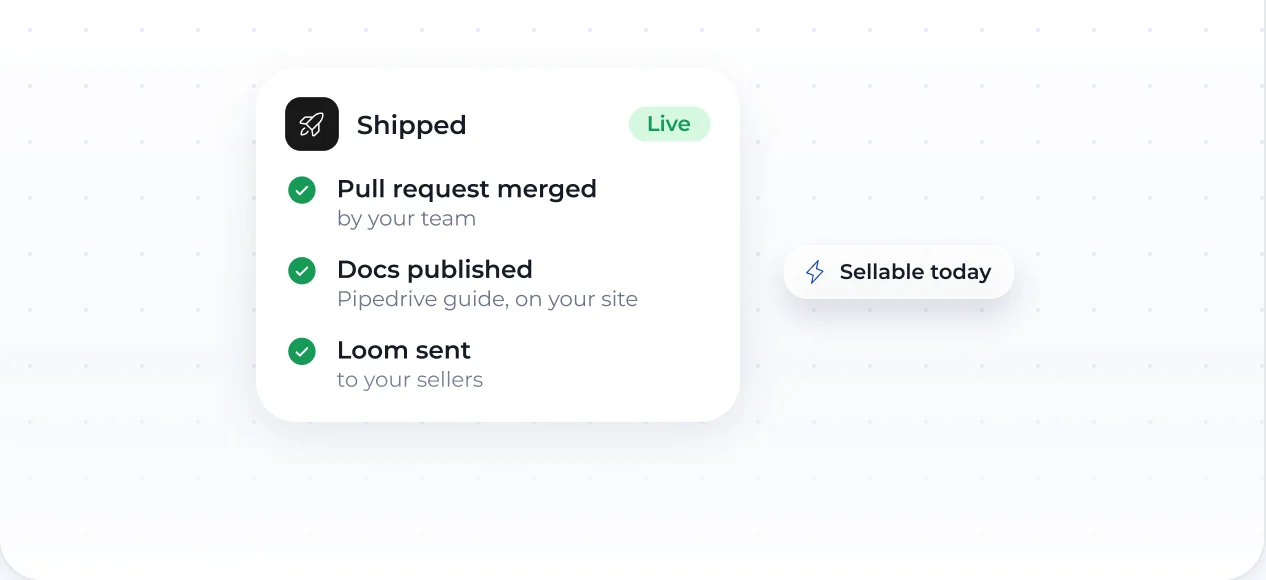
Sell. Onboard. Expand.
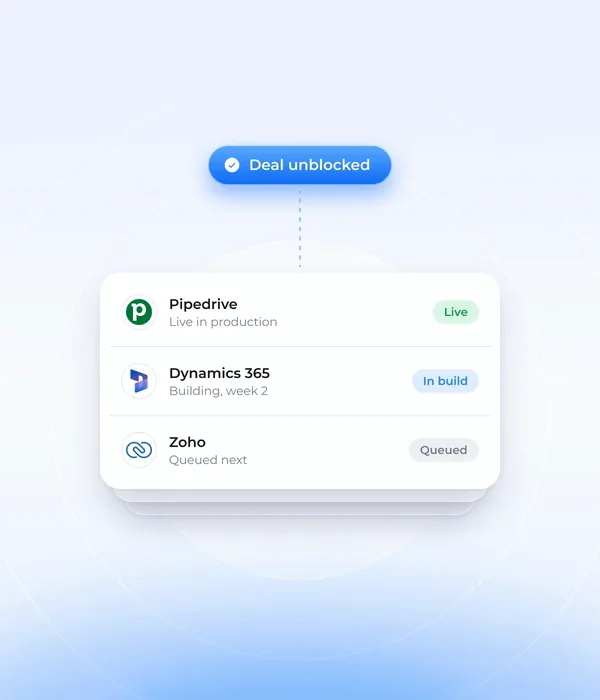
Start with your existing stack. Agree on changes before development starts.
See how your stack fits →What customers achieved.
Results from native Salesforce app projects with Warmly and Salesbricks.

2
Weeks to build
Warmly’s native Salesforce app build. Their full AppExchange launch took eight weeks.
Warmly’s story →40
Engineering hours
Warmly’s total engineering involvement, mostly in requirements calls.
Warmly’s story →
0
Product sprints diverted
Salesbricks reported no engineering sprints diverted to the Salesforce package.
Salesbricks’ story →$2M+
Enterprise revenue
Warmly reported this revenue in deals where the Salesforce integration came up during evaluation.
Warmly’s story →Questions we get asked
Share requirements, provide access, and review the result. Review and testing time is agreed during planning, so your team’s involvement is clear upfront.
Yes. Each customer can have different objects, mappings, and workflows. Share their data model and requirements to scope and test the integration.
Salesforce and HubSpot are the core specialties. Other business systems and custom APIs can also be scoped. Share the system and use case to confirm feasibility and access requirements.
The target is one to three weeks after approval of the technical plan. Complexity, access, and backend dependencies affect timing. Marketplace listing and platform review take additional time.
Custom integration code delivered to your GitHub repository is yours. Appnigma retains ownership of its infrastructure and SDK. The technical plan identifies what runs in your codebase and what uses Appnigma’s platform.
No. Start with your existing stack and agree on where the integration logic should run. Appnigma’s infrastructure is included in managed delivery; existing middleware can remain where it meets the requirements. Backend changes and access are scoped before development starts.
Ongoing maintenance is included. With access to your codebase, Appnigma investigates issues and submits fixes as pull requests for your review. Without code access, you receive an issue report and help coordinating the required changes. Support and release responsibilities are agreed upfront.
This is an ongoing engagement with priorities agreed together. Standalone Salesforce or HubSpot marketplace app projects are available through our marketplace offering.
Bring your buyer’s requirements and deadline. Get a clear scope and delivery timeline to take back to them.